

Many UK business owners assume their website alone drives local visibility, yet directories quietly power over 60% of AI-driven local recommendations and significantly influence Google’s local pack rankings. In 2026, platforms like Foursquare feed data to ChatGPT and other AI search tools, whilst traditional directories continue shaping how customers discover services near them. Understanding how to leverage these platforms transforms your business’s online presence, connecting you with customers actively searching for your services across multiple channels.
Table of Contents
- Understanding The Role Of Directories In UK Local Business Visibility
- How Directories Impact Local SEO And Google Rankings In The UK
- Choosing And Optimising Directories For Your UK Business
- Maintaining And Maximising Your Directory Presence For Ongoing Business Growth
- Boost Your UK Business Visibility With Targeted Directory Advertising
Key takeaways
| Point | Details |
|---|---|
| AI search reliance | AI engines source 60-70% of local recommendations from directory databases like Foursquare |
| SEO impact | Optimised directory listings increase discovery rates by 73% within three months |
| Consistency matters | Matching business details across platforms improves rankings by 10-15% |
| Domain authority | High-authority directories provide stronger SEO signals and better visibility |
| Active management | Regular updates and review responses boost customer engagement by 23% |
Understanding the role of directories in UK local business visibility
Business directories serve as centralised platforms listing company information, contact details, and services across specific categories or geographic regions. In the UK, directories range from broad platforms like Yell and Thomson Local to specialised listings such as NHS.uk for healthcare providers. These platforms collect and verify business data, making it accessible to consumers searching for local services.
Directory aggregators function as the backbone of this ecosystem, collecting business information from primary sources and redistributing it across hundreds of secondary platforms. Directory aggregators standardise and distribute data across multiple channels, ensuring your business appears consistently wherever customers search. This network effect amplifies your visibility far beyond individual directory submissions.
The relationship between directories and AI search has fundamentally shifted local discovery in 2026. AI search engines source 60-70% of recommendations from Foursquare, making directory presence essential for appearing in ChatGPT responses, voice search results, and AI-powered recommendation engines. When someone asks an AI assistant for a local plumber or architect near them, the system pulls primarily from directory databases rather than crawling individual websites.
Key UK directories influencing both traditional and AI search include:
- Google Business Profile (essential for local pack rankings)
- Foursquare (primary data source for AI recommendations)
- Yell and Thomson Local (established UK presence)
- Bing Places (Microsoft ecosystem integration)
- Apple Maps (iOS device dominance)
- Industry-specific platforms like NHS.uk or TripAdvisor
This distributed presence ensures customers find your business regardless of their search method, whilst reinforcing your legitimacy through consistent information across trusted platforms. Directory listings complement your website by providing additional entry points for customer discovery and supporting the citation signals Google uses to verify business authenticity.
How directories impact local SEO and Google rankings in the UK
Local citations from directories serve as trust signals, telling Google your business exists at a specific location with verified contact information. Each citation acts like a vote of confidence, particularly when sourced from authoritative platforms. Google Business Profile contributes 32% of local pack ranking factors, making it the single most influential directory for UK businesses targeting local search visibility.

Domain authority determines how much weight Google assigns to citations from specific directories. A listing on a high-authority platform like NHS.uk (DA 85+) carries significantly more SEO value than a mention on a newly launched directory with minimal online presence. Directory domain authority directly impacts SEO signals, which is why selective directory submission outperforms blanket approaches across hundreds of low-quality sites.
The measurable impact proves substantial. Businesses with optimised listings see 73% discovery rate increases within three months of implementation. This improvement stems from appearing in more search results, ranking higher in local packs, and gaining visibility across AI recommendation engines simultaneously.
NAP consistency (Name, Address, Phone) across all directories forms the foundation of local SEO success. Consistent NAP information improves rankings by 10-15%, whilst inconsistencies trigger ranking penalties and confuse potential customers. Google cross-references your business details across platforms, rewarding exact matches and penalising discrepancies that suggest unreliable information.
| Ranking Factor | Impact Weight | Optimisation Priority |
|---|---|---|
| Google Business Profile | 32% | Critical |
| Citation consistency | 15% | High |
| Directory domain authority | 12% | Medium |
| Review quantity and quality | 11% | High |
| Directory category relevance | 8% | Medium |
Google Business Profile optimisation extends beyond basic listing creation. Complete profiles with photos, business hours, service descriptions, and regular posts outperform minimal listings. This profile synergises with other directory citations, creating a reinforcing network of verified business information that elevates your visibility across all local search channels.
Common pitfalls sabotage otherwise solid directory strategies:
- Inconsistent business names (using abbreviations on some platforms, full names on others)
- Multiple listings for the same location creating duplicate confusion
- Outdated phone numbers or addresses reducing customer contact success
- Empty or minimal profiles missing photos and detailed descriptions
- Ignoring customer reviews or failing to respond professionally
Pro Tip: Create a master NAP document with your exact business name, full address format, and primary phone number. Use this identical format across every directory submission to maintain perfect consistency and maximise ranking benefits.
For carpentry services and painting contractors, directory presence proves particularly valuable as customers typically search locally and compare multiple providers before deciding. Your optimised listings ensure you appear in these crucial comparison moments.
Choosing and optimising directories for your UK business
Selecting high-value directories requires evaluating three core criteria: domain authority, UK traffic relevance, and data syndication reach. Prioritise directories based on these factors rather than submitting to every available platform. Quality citations from ten authoritative directories outperform hundreds of low-value listings that contribute minimal SEO benefit.
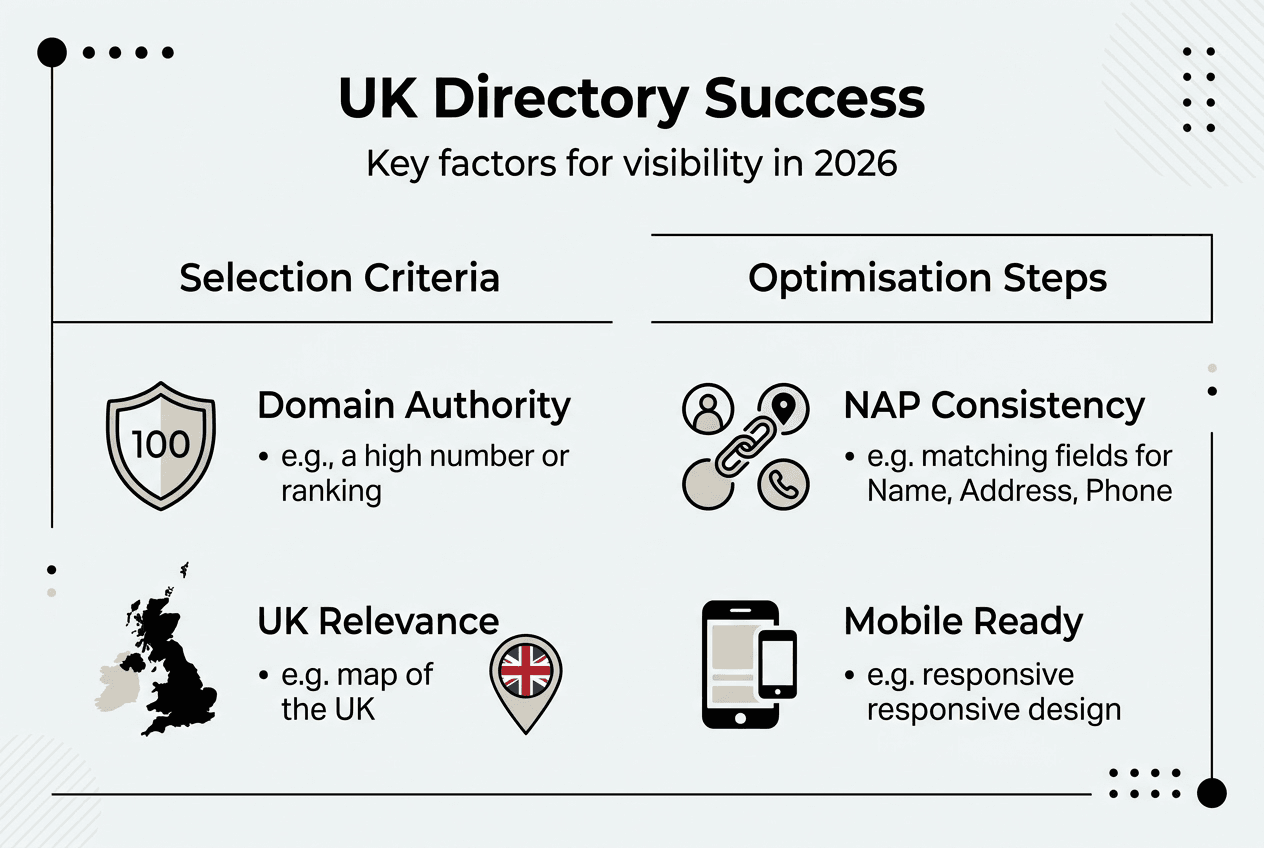
Niche-specific directories often deliver better results than general platforms for specialised services. Healthcare providers benefit from NHS.uk Find Services with its exceptional domain authority, whilst hospitality businesses gain substantial visibility through TripAdvisor profiles that feed data to Apple Maps and appear consistently in AI search results. Matching directory selection to your industry increases relevance signals and connects you with actively searching customers.
Optimising individual listings maximises their impact:
- Claim and verify ownership of existing listings before creating new ones
- Use your exact NAP format from your master document without variation
- Select the most specific relevant categories available on each platform
- Write keyword-rich descriptions that naturally incorporate search terms customers use
- Upload high-quality photos showing your work, team, and location
- Add complete business hours including bank holidays and seasonal variations
- Enable messaging and respond promptly to customer enquiries
Mobile optimisation of directory listings proves essential as the majority of local searches originate from mobile devices. Ensure your phone number links correctly for tap-to-call functionality, your address opens in mapping applications, and photos display properly on smaller screens. Mobile-friendly listings convert browsers into customers more effectively than desktop-only optimised profiles.
Keyword integration within descriptions requires balance. Include terms customers actually search (“emergency plumber Manchester” or “wedding photographer Surrey”) whilst maintaining natural, readable text. Avoid keyword stuffing that triggers spam filters and reduces listing quality scores.
| Directory | Domain Authority | Best For | AI Influence |
|---|---|---|---|
| Google Business Profile | 95+ | All businesses | Very High |
| Foursquare | 90+ | Retail, hospitality | Critical for AI |
| NHS.uk Find Services | 85+ | Healthcare | High |
| TripAdvisor | 90+ | Hospitality, tourism | High |
| Yell | 80+ | General UK businesses | Medium |
Review monitoring forms part of directory optimisation rather than a separate activity. Enable review notifications, respond professionally to both positive and negative feedback, and address concerns publicly to demonstrate customer service commitment. Reviews influence both rankings and customer decisions, making active management essential.
Pro Tip: Focus your initial efforts on Google Business Profile, Foursquare, and one industry-specific directory. Perfect these three listings before expanding to secondary platforms, ensuring quality over quantity in your directory presence.
For gardening services and removal companies, local directory presence directly correlates with enquiry volume. Customers searching for these services typically choose from the first few results, making optimised listings crucial for capturing this demand.
Maintaining and maximising your directory presence for ongoing business growth
Directory management requires ongoing attention rather than one-time setup. Conduct quarterly audits reviewing all major listings for accuracy, completeness, and performance. Update business hours immediately when they change, add new photos showcasing recent work, and refresh service descriptions to reflect current offerings. Regular updates maintain accuracy and signal to search engines that your business actively manages its online presence.
Duplicate listings create confusion for both search engines and customers, potentially triggering ranking penalties. Search for your business name combined with your city to identify duplicate profiles, then claim and merge them through each platform’s management tools. Inconsistent NAP information causes 40% ranking decreases, making duplicate removal a priority maintenance task.
Review engagement builds trust and improves customer relationships. Prompt review responses increase engagement by 23%, demonstrating your commitment to customer satisfaction. Respond to positive reviews with genuine appreciation, address negative reviews professionally with solutions, and never argue publicly with dissatisfied customers.
Common maintenance pitfalls to avoid:
- Ignoring notifications about listing changes or customer questions
- Allowing outdated promotional offers to remain visible
- Failing to remove closed locations or discontinued services
- Neglecting photo updates that keep listings fresh and engaging
- Missing opportunities to add new features as platforms introduce them
Pro Tip: Set calendar reminders for quarterly directory audits and monthly review response sessions. Consistent maintenance prevents small issues from becoming ranking problems whilst keeping your business top-of-mind for repeat searches.
Seasonal updates capitalise on changing customer needs. Add summer trading hours, highlight winter services, or promote bank holiday availability through directory updates that appear in local search results. These timely adjustments match your visibility with current customer search behaviour.
Keyword optimisation evolves as customer search patterns shift. Review your directory descriptions annually, incorporating new service terms or location keywords that reflect business expansion. This ongoing refinement maintains relevance as your business grows and market conditions change.
For cleaning services and similar recurring-need businesses, maintained directory presence ensures you appear when previous customers search again or recommend you to others. Consistent visibility across directories reinforces brand recognition and supports word-of-mouth referrals with easily discoverable online profiles.
Boost your UK business visibility with targeted directory advertising
Whilst organic directory listings provide substantial value, targeted advertising amplifies your reach to customers actively searching for your specific services. The Great British List offers category-specific advertising opportunities connecting UK businesses with local customers across sectors from photography to painting and decorating.
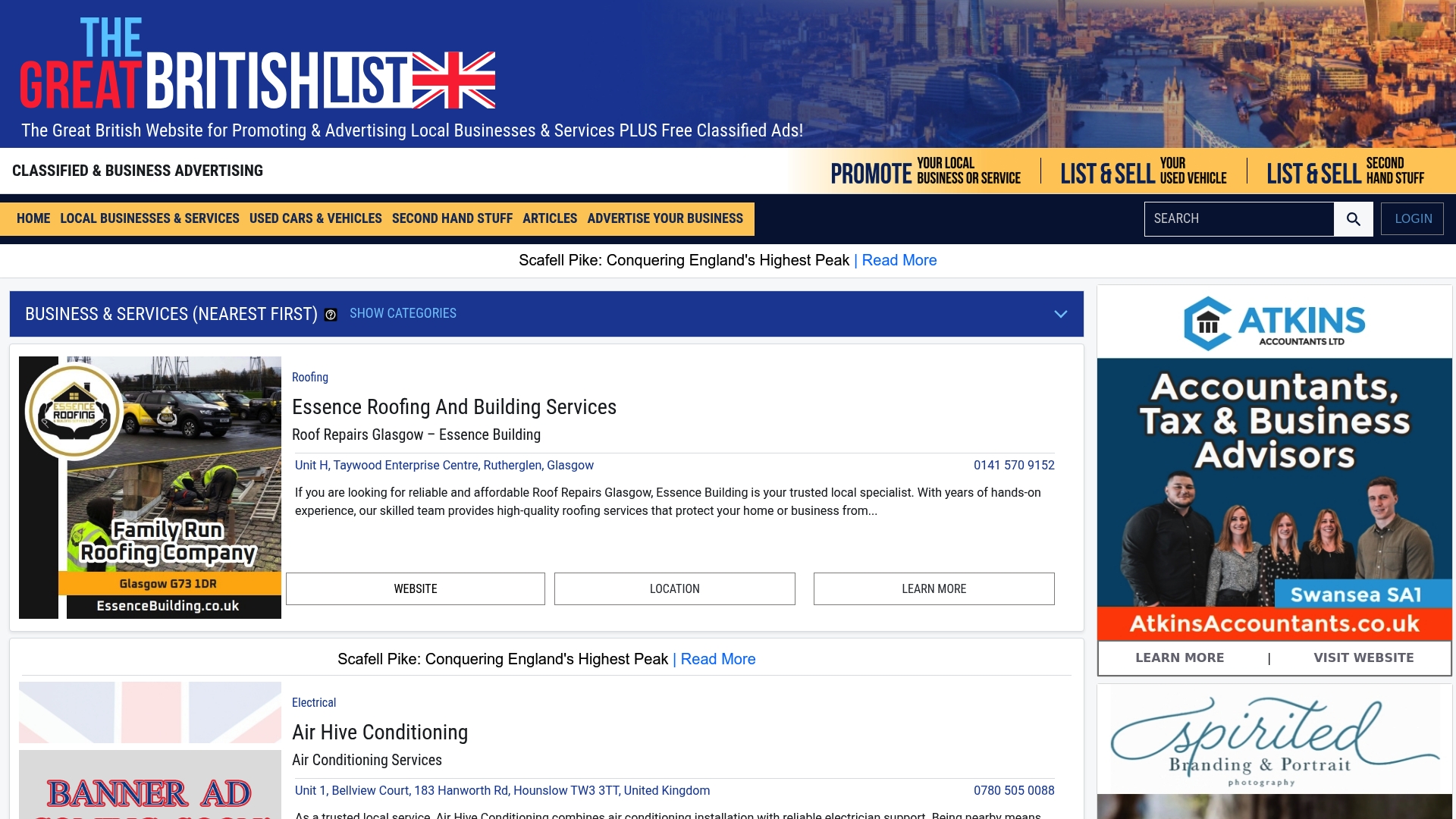
These specialised category pages attract customers with clear service intent, increasing conversion rates compared to broad advertising platforms. Whether you provide gardening services or operate in another trade, targeted directory advertising positions your business directly in front of customers searching for exactly what you offer. The combination of optimised organic listings and strategic advertising creates comprehensive local visibility that drives measurable business growth.
FAQ
What are the top UK business directories for local SEO?
Google Business Profile, Foursquare, NHS.uk (for healthcare), TripAdvisor (for hospitality), and Bing Places form the core high-authority directories for UK businesses. Prioritise platforms with strong domain authority and relevance to your specific industry sector. Industry-specific directories often deliver better targeted visibility than general platforms alone.
How often should I update my directory listings?
Review all major directory listings quarterly as a minimum, updating immediately when business details change. Regular updates prevent outdated information from harming rankings and customer trust. Add fresh photos, seasonal offers, and service updates monthly on your primary platforms like Google Business Profile to maintain engagement and search visibility.
Can poor directory data hurt my local SEO?
Absolutely. Inconsistent NAP data decreases rankings by 40%, whilst duplicate listings confuse search engines and dilute your authority signals. Ensure every directory shows identical business name, address, and phone number formatting. Regular audits identifying and correcting inconsistencies protect your rankings and prevent customer confusion that costs you enquiries.
Do directories really influence AI search recommendations?
Yes, significantly. AI search engines like ChatGPT rely heavily on directory databases, with Foursquare alone supplying 60-70% of local business recommendations. Optimising your presence on directories that feed AI systems ensures you appear when customers ask virtual assistants for service recommendations. This influence will only grow as AI search adoption increases throughout 2026 and beyond.

.jpg)


.jpg)