UK homeowners lose approximately £4 billion annually to rogue traders and substandard work. This staggering figure highlights why finding trustworthy local service providers is crucial for protecting your home and finances. Whether you need a plumber, electrician, or carpenter, understanding what local services truly are and how to identify vetted professionals can save you from costly mistakes. This guide clarifies the definition of local services, explains government-backed vetting schemes, reveals the limitations of online reviews, and provides practical steps to safely hire reliable tradespeople in 2026.
Table of Contents
- What Local Services Mean And Why They Matter
- Understanding Vetting And Certification Schemes For Local Service Providers
- Risks Of Rogue Traders And Limitations Of Online Reviews And Guarantees
- How To Safely Find And Choose Vetted Local Services In 2026
- Find Trusted Local Services With The Great British List
- FAQ
Key takeaways
| Point | Details |
|---|---|
| Definition | Local services are trusted tradespeople providing home repairs, maintenance, and improvements near your location |
| Vetting schemes | Government-backed programmes like TrustMark and NAPIT verify competence, insurance, and trading standards |
| Review limitations | Online reviews can mislead as they may be fake or unverified, requiring deeper credential checks |
| Rogue trader risks | Consumers face significant financial losses despite guarantee claims, making thorough vetting essential |
| Safe hiring | Verify certifications, check insurance, request references, and use multiple sources before committing |
What local services mean and why they matter
Local services encompass tradespeople and businesses offering essential home repairs, maintenance, and improvement work within your community. These include plumbers fixing leaks, electricians rewiring circuits, carpenters building bespoke furniture, and decorators refreshing your living spaces. Unlike large national contractors, local service providers typically operate within specific geographic areas, building reputations through word-of-mouth and repeat business.
Engaging competent and vetted professionals ensures your home remains safe, compliant with building regulations, and properly maintained. Faulty electrical work can cause fires, poor plumbing leads to water damage, and substandard carpentry compromises structural integrity. TrustMark is the only UK Government-Endorsed Quality Scheme for work carried out in and around the home, providing consumers with confidence that registered businesses meet rigorous standards.
UK homeowners commonly seek local services for:
- Emergency repairs like burst pipes or electrical faults
- Routine maintenance including boiler servicing and gutter cleaning
- Home improvements such as kitchen installations and loft conversions
- Specialist work like damp proofing and roof repairs
- Seasonal tasks including garden landscaping and exterior painting
Local services differ from general contractors or national companies in several ways. Local providers often offer more personalised service, flexible scheduling, and direct accountability to their community reputation. They understand regional building practices, local authority requirements, and area-specific challenges like soil conditions or weather patterns. A local business directory helps you find these providers quickly, filtering by trade, location, and verified credentials.
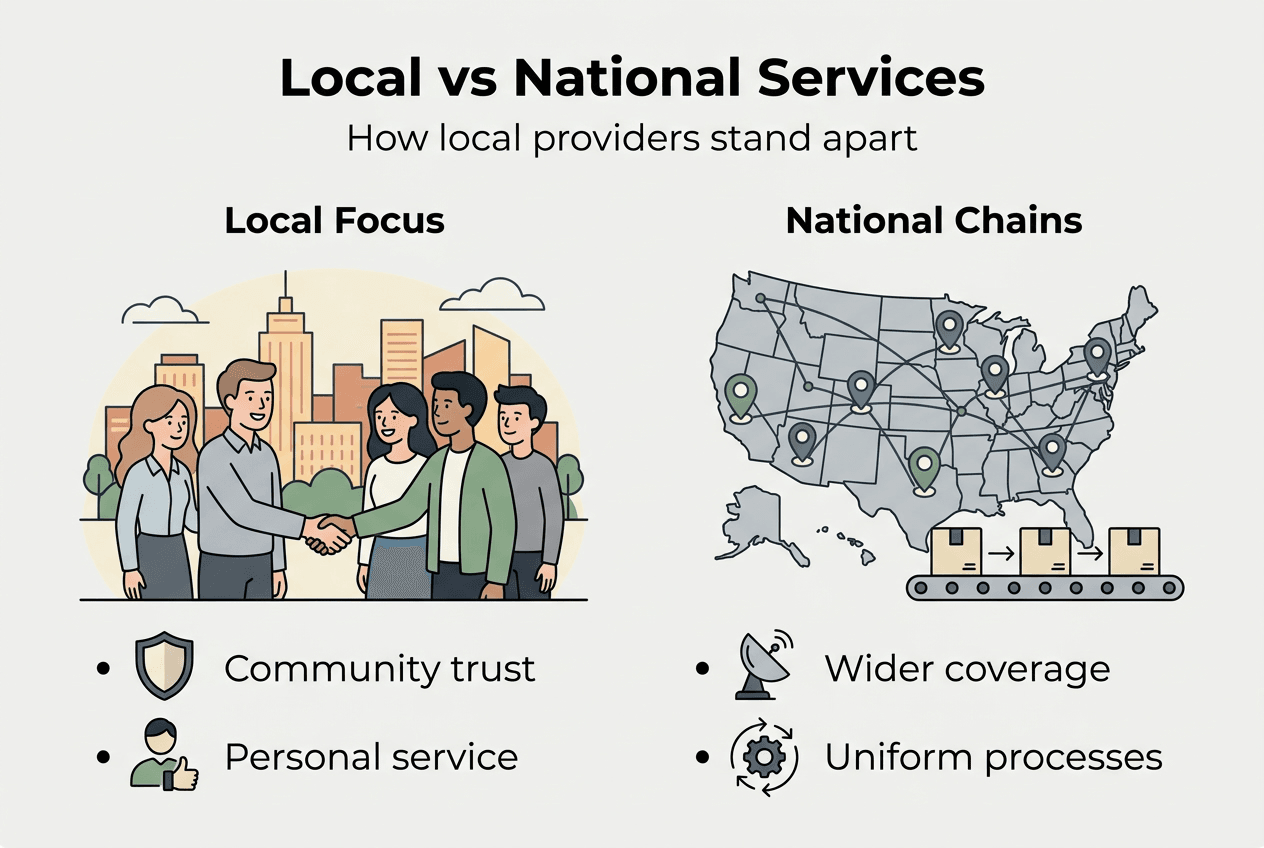
The distinction matters because local tradespeople stake their business survival on community trust. Poor work spreads quickly through neighbourhood networks, making quality and reliability essential for their continued success. This inherent accountability, combined with proper vetting, creates a foundation for safe hiring decisions.
Understanding vetting and certification schemes for local service providers
Government-endorsed schemes provide crucial consumer protection by verifying that tradespeople meet minimum competence, insurance, and trading standards. TrustMark stands as the gold standard, offering ongoing monitoring rather than one-time approval. TrustMark Registered Businesses are vetted and monitored by Scheme Providers to ensure they meet high standards of technical competence, customer service, and trading practices.
NAPIT offers another robust certification path, particularly for electrical and related trades. NAPIT certificated scheme members have demonstrated their competence, they hold the necessary insurances and have the right processes and procedures to assure compliance. This certification confirms tradespeople possess current technical knowledge, maintain appropriate insurance coverage, and follow proper business procedures.
These schemes differ fundamentally from simple directory listings or generic badges. Directory membership often requires only basic identity verification and insurance proof, not technical competence assessment. Government-endorsed schemes demand:
- Verified qualifications and ongoing training
- Regular inspections of completed work
- Comprehensive insurance including public liability
- Adherence to consumer protection regulations
- Complaints handling procedures
- Financial stability checks
Technical competence means tradespeople understand current building regulations, safety standards, and best practices for their trade. Customer service encompasses clear communication, transparent pricing, and professional conduct. Trading standards ensure businesses operate honestly, provide written quotes, and honour guarantees.
Verifying credentials protects you from fraudulent claims. Visit official scheme websites directly rather than trusting badges on business cards or vans. Enter the tradesperson’s registration number to confirm active membership and check for any disciplinary actions. Legitimate professionals welcome this verification and provide registration details upfront.
Using registered businesses offers tangible benefits beyond peace of mind. You gain access to independent dispute resolution, insurance-backed guarantees, and recourse if work falls below standard. For local carpentry services or local painting services, certification confirms the tradesperson understands material properties, application techniques, and safety requirements specific to their craft.
Pro Tip: Always confirm certification validity via official scheme websites before hiring, as some traders display expired or fraudulent credentials to appear trustworthy.
Risks of rogue traders and limitations of online reviews and guarantees
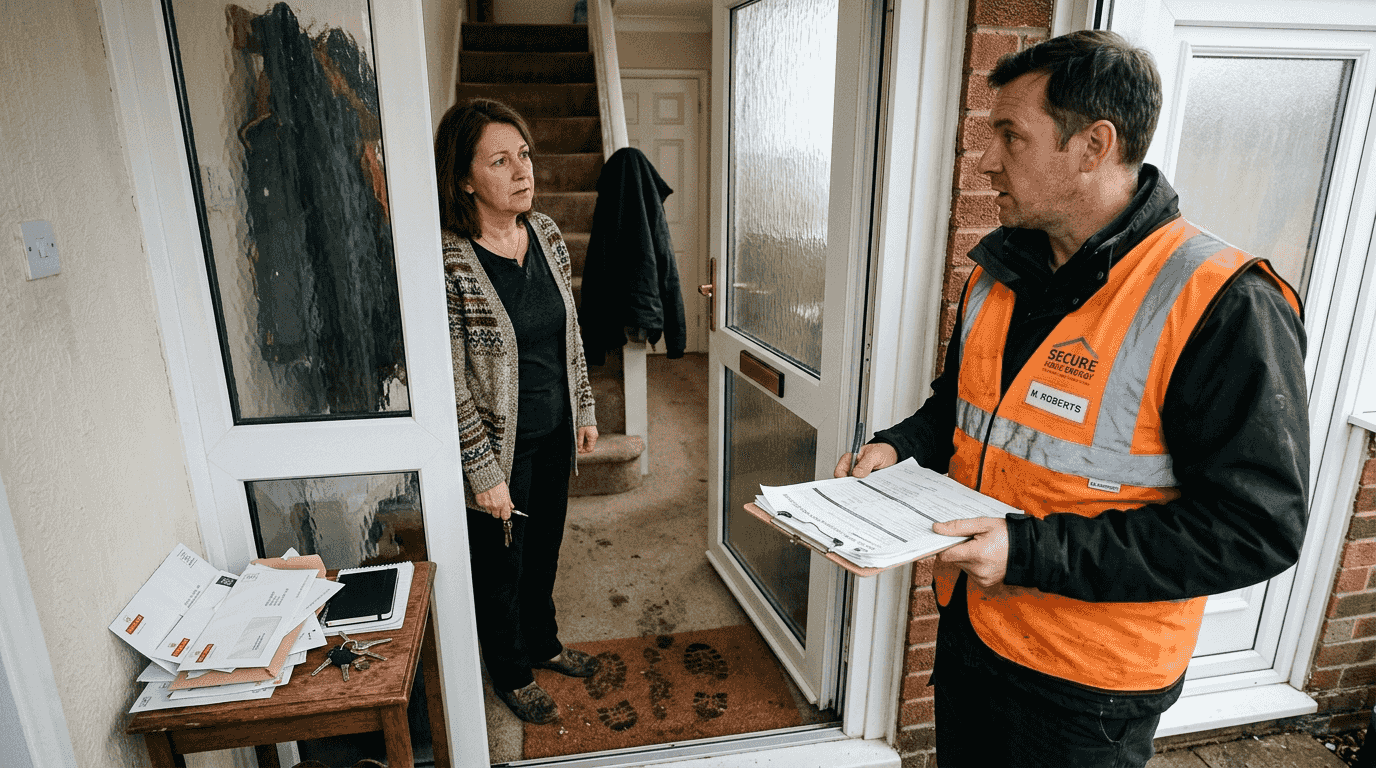
Rogue traders inflict devastating financial and emotional damage on UK homeowners. Beyond the £4 billion lost annually, victims face stress, disrupted homes, and dangerous substandard work requiring expensive remediation. Vulnerable homeowners, particularly elderly residents, become prime targets for high-pressure sales tactics and shoddy workmanship.
Online reviews and guarantee schemes provide less protection than many consumers realise. Checkatrade states that only 0.03% of jobs annually result in a guarantee claim, revealing how rarely these safety nets activate. This statistic seems reassuring until you examine real cases where guarantees failed to cover significant losses.
Carlos and Gemma’s experience illustrates guarantee limitations perfectly. After losing £28,000 to a rogue builder found through a popular directory, they received only a £1,000 guarantee payout. The small print excluded numerous scenarios, capped compensation far below actual losses, and required extensive documentation many homeowners cannot provide. Their story repeats across thousands of UK households annually.
Online reviews present their own hazards:
- Fake reviews posted by traders or competitors
- Incentivised positive reviews skewing ratings
- Selective deletion of negative feedback
- Reviews from years ago not reflecting current standards
- Unverified reviewers who may never have used the service
Directory badges often confirm only identity and insurance, not technical competence. A trader can hold valid insurance yet lack skills to complete work properly. Identity verification prevents completely anonymous operators but does nothing to assess workmanship quality or customer service standards.
87% of homeowners fear hiring trades due to trust concerns.
Before paying any deposit, take these essential steps:
- Verify all certifications through official scheme websites
- Request and contact at least three recent references
- Confirm insurance coverage matches the job scope
- Read guarantee terms thoroughly, noting exclusions and caps
- Check Companies House for business registration and financial health
- Obtain multiple written quotes for comparison
Small print on guarantees often excludes common scenarios like disputes over quality standards, work completed outside the directory’s process, or claims exceeding arbitrary limits. Some guarantees require you to prove the trader’s fault definitively, an impossible standard when technical expertise differs.
Red flags demanding immediate caution include requests for large upfront payments, pressure to sign contracts immediately, reluctance to provide written quotes, vague business addresses, and resistance to credential verification. Legitimate tradespeople expect scrutiny and provide documentation readily.
For services like local removal services, where valuable possessions face risk, thorough vetting becomes even more critical. Insurance coverage must specifically address the work type, as general policies may exclude certain activities or damage types.
Pro Tip: Carefully read small print on guarantees and be sceptical of too-good-to-be-true reviews, as platforms profit from trader subscriptions and may have conflicts of interest in dispute resolution.
How to safely find and choose vetted local services in 2026
Reputable digital platforms and directories with robust vetting processes provide your safest starting point. Digital platforms and online directories play a vital role in connecting consumers with vetted local service providers, but not all platforms apply equal rigour to their vetting procedures. Prioritise directories requiring government-endorsed certifications over those accepting any trader willing to pay subscription fees.
Verify service providers systematically before hiring:
- Confirm active registration with TrustMark, NAPIT, or equivalent schemes
- Check insurance certificates cover the specific work and sufficient liability limits
- Read recent verified reviews from multiple independent sources
- Request photographic evidence or site visits to view past completed projects
- Verify business registration and trading history through Companies House
- Confirm the tradesperson holds relevant qualifications for specialised work
| Scheme | Identity Check | Insurance Verified | Technical Competence | Ongoing Monitoring | Dispute Resolution | Insurance-Backed Guarantee |
|---|---|---|---|---|---|---|
| TrustMark | Yes | Yes | Yes | Yes | Yes | Yes |
| NAPIT | Yes | Yes | Yes | Yes | Yes | Yes |
| Basic Directories | Yes | Sometimes | No | No | Limited | Sometimes |
Practical tips for safe hiring:
- Request detailed written quotes itemising labour, materials, and timelines
- Understand guarantee coverage, exclusions, and claim procedures fully
- Confirm project timelines with penalty clauses for delays
- Insist on written contracts specifying scope, payment schedule, and completion criteria
- Agree payment terms favouring staged payments tied to completion milestones
- Establish communication protocols and site access arrangements
- Clarify responsibility for permits, inspections, and waste removal
Key red flags signalling potential problems:
- Demands for full payment upfront or large deposits exceeding 25%
- High-pressure tactics claiming limited-time offers or urgent action needed
- Refusal to provide verifiable references from recent clients
- Reluctance to put agreements in writing or vague contract terms
- Business operating from residential addresses without proper registration
- Unwillingness to allow credential verification or provide documentation
- Quotes significantly lower than competitors without clear explanation
Cross-checking credentials across multiple sources catches fraudulent claims effectively. A trader might display a TrustMark logo but lack active registration. Phone numbers on certificates might connect to accomplices confirming fake credentials. Independent verification through official websites eliminates these deceptions.
For local cleaning services, local photography services, or local gardening services, the same verification principles apply. Even seemingly low-risk services require proper insurance and professional standards to protect your property and interests.
Payment structures should favour you until work completion. Typical arrangements include a small deposit for materials, progress payments at defined milestones, and final payment only after satisfactory completion and any required inspections. Never pay the full amount before work finishes, regardless of excuses about supplier terms or cash flow.
Written contracts protect both parties by establishing clear expectations. Include detailed scope descriptions, specific materials and brands, completion dates, payment schedules, warranty terms, and dispute resolution procedures. Both parties should sign and retain copies before work commences.
Pro Tip: Use multiple sources to cross-check credentials and reviews for best assurance, as relying on a single platform leaves you vulnerable to that platform’s vetting weaknesses or conflicts of interest.
Find trusted local services with The Great British List
The Great British List offers a comprehensive local business directory connecting UK consumers with vetted service providers across diverse trades. Our platform curates listings with transparent vetting information, helping you make informed decisions about local carpentry services, local painting services, and numerous other essential trades.

Search by location, trade category, and specific requirements to find professionals near you. Each listing provides background details, credential information, and contact options, streamlining your search for reliable tradespeople. Popular categories include:
- Carpenters and joiners for bespoke furniture and structural work
- Painters and decorators for interior and exterior projects
- Gardeners and landscapers for outdoor transformations
- Electricians for installations and safety inspections
- Plumbers for repairs and system upgrades
Pro Tip: Check provider profiles for background details and reviews before making contact, using the information as part of your broader verification process rather than your sole decision criterion.
FAQ
What criteria define a local service provider?
Local service providers are businesses or tradespeople offering repair, maintenance, and improvement services within your geographic area, typically operating within a specific town, city, or region. They build reputations through community presence and often specialise in trades like plumbing, electrical work, carpentry, or decorating. Proper local providers hold relevant certifications, maintain appropriate insurance, and comply with local authority building regulations.
How can I verify if a tradesperson is properly certified and insured?
Verify certifications by visiting official scheme websites like TrustMark or NAPIT directly and entering the tradesperson’s registration number to confirm active membership. Request copies of insurance certificates and contact the insurer to verify coverage remains current and adequate for your project scope. Ask for proof of qualifications relevant to the specific work, such as Gas Safe registration for boiler work or electrical qualifications for rewiring projects.
Are online reviews enough to trust a local service provider?
Online reviews provide helpful initial insights but should never serve as your sole vetting method, as they can be manipulated, incentivised, or outdated. Combine reviews with verification of official certifications, personal references from recent clients, and independent checks of insurance and business registration. Treat reviews as one data point among many rather than definitive proof of reliability or competence.
Recommended
- Find Removal Companies Near Me | House Removals & Man and Van
- Find Local Gardeners Near Me | Landscaping & Garden Services
- Find Photographers Near Me | Wedding & Event Photography
- Find Painters & Decorators Near Me | Local Painting Services
- Comprehensive Marriage Services in UAE | Civil and Islamic Packages | Harris N Charms