Searching for a local plumber, hairdresser, or accountant should be straightforward, yet many UK consumers find themselves overwhelmed by inconsistent naming and confusing groupings. Understanding service categories transforms this frustration into clarity, helping you quickly identify the right trade or professional service for your needs. This guide explains what service categories are, why they matter, and how to use them effectively when finding home improvement, personal care, and professional services locally.
Table of Contents
- Key takeaways
- What are service categories and why do they matter?
- Common service categories in the UK: examples and breakdown
- How regional variations and consumer risks affect service categories
- Where to find and how to use service categories for your local needs
- Explore trusted local service providers with the Great British List
- Frequently asked questions about service categories
Key Takeaways
| Point | Details |
|---|---|
| Purpose of categories | Standardised groupings organise related trades and services to simplify searching and comparison. |
| Search efficiency | Clear categories let you navigate directly to the service you need, saving time. |
| Common service groups | Home improvement, personal care and professional services are typical headings you will encounter. |
| Regional price variation | Prices vary across categories and regions, affecting what you pay locally. |
What are service categories and why do they matter?
Service categories are standardised groupings that organise related service providers to simplify searching and comparison. Service categories for UK consumers classify trades and professional services into recognisable groups like home improvement, personal care, and professional services. These categories appear across online directories, consumer platforms, and government data collection systems.
Why does this matter to you? Clear categorisation reduces confusion when you need a specific service. Instead of scrolling through hundreds of unrelated businesses, you can navigate directly to plumbers, electricians, builders, hairdressers, or accountants. This efficiency saves time and helps you compare providers within the same field.
The importance becomes stark when you consider consumer risks. Research shows that 72% of UK consumers experienced some form of detriment when purchasing services in 2024, often because they struggled to identify qualified providers or understand service boundaries. Categories act as a first filter, helping you narrow your search to relevant specialists.
Here’s what service categories typically include:
- Home improvement: plumbers, electricians, builders, decorators, roofers
- Personal care: hairdressers, beauty therapists, massage services, nail technicians
- Professional services: accountants, solicitors, financial advisers, estate agents
- Specialist trades: carpenters, plasterers, tilers, landscapers
Online business directories rely heavily on these groupings to organise listings. When you visit a directory platform, you’ll typically see a menu of categories that lets you drill down from broad groups to specific services. This hierarchical structure mirrors how consumers naturally think about their needs.
“Standardised service categories provide the foundation for consumer protection and market transparency. Without clear groupings, consumers face increased risk of hiring inappropriate or unqualified providers.”
Government agencies use these same categories for regulatory oversight and consumer protection initiatives. When you understand the category system, you’re tapping into a framework designed to protect your interests and ensure you’re comparing like with like.
Common service categories in the UK: examples and breakdown
Let’s examine the major service categories you’ll encounter when searching for local providers, with specific examples that clarify what each group includes.
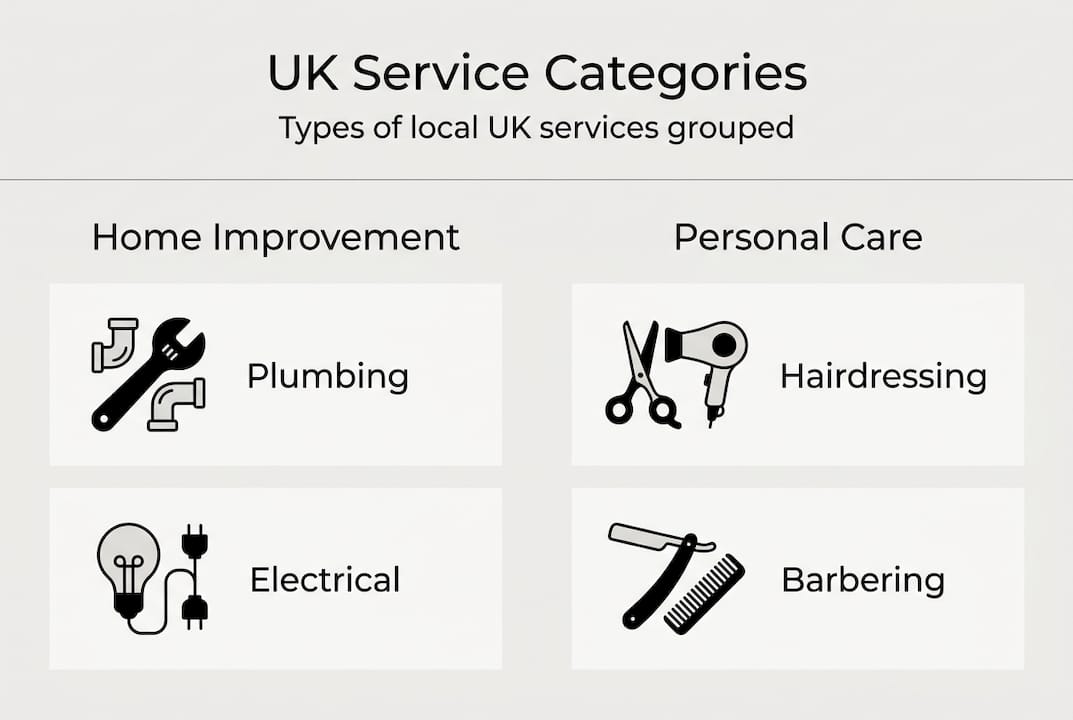
Home improvement represents the largest category for consumer searches. Home improvement includes plumbing, electrical, HVAC, roofing, builders, decorators, gardeners, and cleaners, covering virtually every trade you might need for property maintenance or renovation. Within this broad category, you’ll find subcategories that help you pinpoint exactly what you need.

Personal care services encompass beauty and wellness providers. This category includes hairdressers, barbers, beauty salons, nail technicians, massage therapists, and wellness practitioners. These services focus on individual grooming, appearance, and relaxation rather than property or financial needs.
Professional services cover knowledge-based specialists who provide advice, planning, or representation. Local accountants fall into this category alongside solicitors, financial advisers, estate agents, and business consultants. These providers typically require professional qualifications and regulatory oversight.
Here’s a breakdown of top services by category:
| Category | Top Services | Typical Providers |
|---|---|---|
| Home Improvement | Plumbing, electrical, building | Local gardeners, painters & decorators, cleaning services |
| Personal Care | Hair, beauty, wellness | Hairdressers, beauty salons, massage therapists |
| Professional Services | Financial, legal, property | Accountants, solicitors, estate agents |
| Specialist Trades | Carpentry, plastering, tiling | Carpenters, plasterers, tilers |
Understanding subcategories within these broad groups helps you match your exact needs. For example, within home improvement, you might need a general builder for structural work, but a specialist decorator for finishing touches. Similarly, within personal care, you’d choose a hairdresser for cutting and styling, but a beauty therapist for skincare treatments.
Pro Tip: When searching directories, start with the broadest category that fits your need, then narrow down using subcategories or service descriptions. Many providers list multiple specialisations, so checking their full profile ensures you find someone who matches your specific requirements.
The categorisation system also helps you understand which providers require specific qualifications or certifications. Electricians and gas engineers, for instance, must hold legally mandated certifications, whilst decorators and cleaners typically don’t face the same regulatory requirements. Knowing the category helps you ask the right questions about credentials.
How regional variations and consumer risks affect service categories
Service categories remain consistent across the UK, but prices and availability vary significantly by region. Understanding these variations helps you set realistic expectations and budget appropriately when hiring local providers.
Consumer detriment in 2024 affected 72% of UK consumers, with electricians, plumbers, and gardeners representing the highest demand services. Regional rate differences compound this challenge. London electricians typically charge £55 to £85 per hour, whilst those in the North charge £40 to £60 for identical work. These gaps reflect cost of living differences, local competition levels, and regional demand patterns.
Here’s how average rates compare across regions for common trades:
| Service Category | London Rate | South East | Midlands | North | Scotland |
|---|---|---|---|---|---|
| Electrician (hourly) | £55-85 | £50-75 | £45-65 | £40-60 | £42-62 |
| Plumber (hourly) | £60-90 | £55-80 | £48-70 | £45-65 | £47-68 |
| Decorator (daily) | £180-280 | £160-240 | £140-200 | £130-180 | £135-190 |
| Gardener (hourly) | £25-40 | £22-35 | £20-30 | £18-28 | £19-29 |
These price variations don’t reflect quality differences. A skilled carpenter in the North delivers the same craftsmanship as one in London, but operating costs and market conditions differ. When comparing quotes, factor in your region’s typical rates rather than national averages.
Consumer risks extend beyond pricing. Watch for these warning signs when evaluating providers:
- No verifiable business address or contact details
- Refusal to provide written quotes or contracts
- Pressure to pay large deposits upfront
- Lack of insurance or relevant certifications
- Absence of reviews or references from previous clients
- Vague descriptions of services or timelines
Understanding service categories helps you identify these risks earlier. If someone claims to be a qualified electrician but can’t show certification, or if a removal company lacks proper insurance, you can quickly recognise the mismatch between their claims and category requirements.
Regional availability also affects your options. Rural areas typically have fewer providers per category, which can increase prices due to reduced competition and higher travel costs. Urban areas offer more choice but require more careful vetting to separate quality providers from opportunistic operators.
Pro Tip: Before requesting quotes, research typical rates for your service category in your specific region. This knowledge prevents you from overpaying or accepting suspiciously low quotes that might indicate poor quality or hidden costs. Local business directories often include rate guides or average pricing for your area.
The relationship between local and long-distance service differences also matters when hiring certain categories. Removal companies, for instance, structure pricing entirely differently for local versus long-distance moves, even though both fall under the same service category. Understanding these nuances within categories helps you ask informed questions and compare quotes accurately.
Where to find and how to use service categories for your local needs
Applying your knowledge of service categories requires knowing where to look and how to navigate directory platforms effectively. Most local business directories organise listings by category, making your search straightforward once you understand the system.
Follow these steps to find the right provider using service categories:
- Identify your specific need and match it to the appropriate category (home improvement, personal care, professional services)
- Navigate to a directory platform and select the relevant category from the main menu
- Narrow your search using subcategories or location filters to find providers near you
- Review multiple provider profiles within the same category to compare services, prices, and reviews
- Verify credentials, insurance, and certifications relevant to that service category
- Contact shortlisted providers to clarify service scope, availability, and pricing
- Request written quotes from at least three providers before making your decision
Most platforms let you filter by location, which helps you find nearby providers who can respond quickly and charge less for travel. Some directories also offer filtering by price range, customer ratings, or specific service features.
When reviewing provider profiles, look for these quality indicators:
- Clear description of services offered within their category
- Visible business registration or company number
- Professional photos of previous work
- Customer reviews with specific details about services provided
- Transparent pricing information or quote processes
- Relevant certifications or trade body memberships
Common platforms offering category-based browsing include national business directories, local council websites, trade association directories, and consumer review platforms. Each platform structures categories slightly differently, but the underlying groupings remain consistent.
When contacting providers, ask category-specific questions. For electricians, enquire about Part P certification and insurance. For photographers, ask about equipment, backup plans, and image delivery timelines. For accountants, verify their qualifications and experience with businesses similar to yours.
Here are practical tips for using categories effectively:
- Start broad, then narrow: begin with the main category, then use subcategories to refine your search
- Check multiple providers: never hire the first result without comparing at least three options
- Read reviews within context: understand that different services within a category have different quality markers
- Verify category-appropriate credentials: each service type has specific qualifications or certifications you should expect
- Ask for category-specific references: request examples of similar work or clients in your situation
Some directories also feature highlighted or promoted listings. Whilst these providers have paid for visibility, don’t assume they’re automatically better than non-promoted listings. Use the same verification process regardless of listing prominence.
The category system also helps you understand pricing structures. Home improvement services typically quote by hour or project, personal care services usually charge per session or treatment, and professional services might use hourly rates, fixed fees, or retainers. Knowing these norms for each category helps you evaluate whether a quote seems reasonable.
Explore trusted local service providers with the Great British List
Now that you understand how service categories work and why they matter, you need a reliable platform to put this knowledge into practice. The Great British List offers a comprehensive directory organised by the service categories we’ve discussed, making it simple to find trusted local providers across the UK.
Whether you need painters & decorators for a home refresh, local gardeners for regular maintenance, removal companies for your next move, or photographers to capture special moments, the platform’s category-based structure helps you navigate directly to relevant providers in your area.
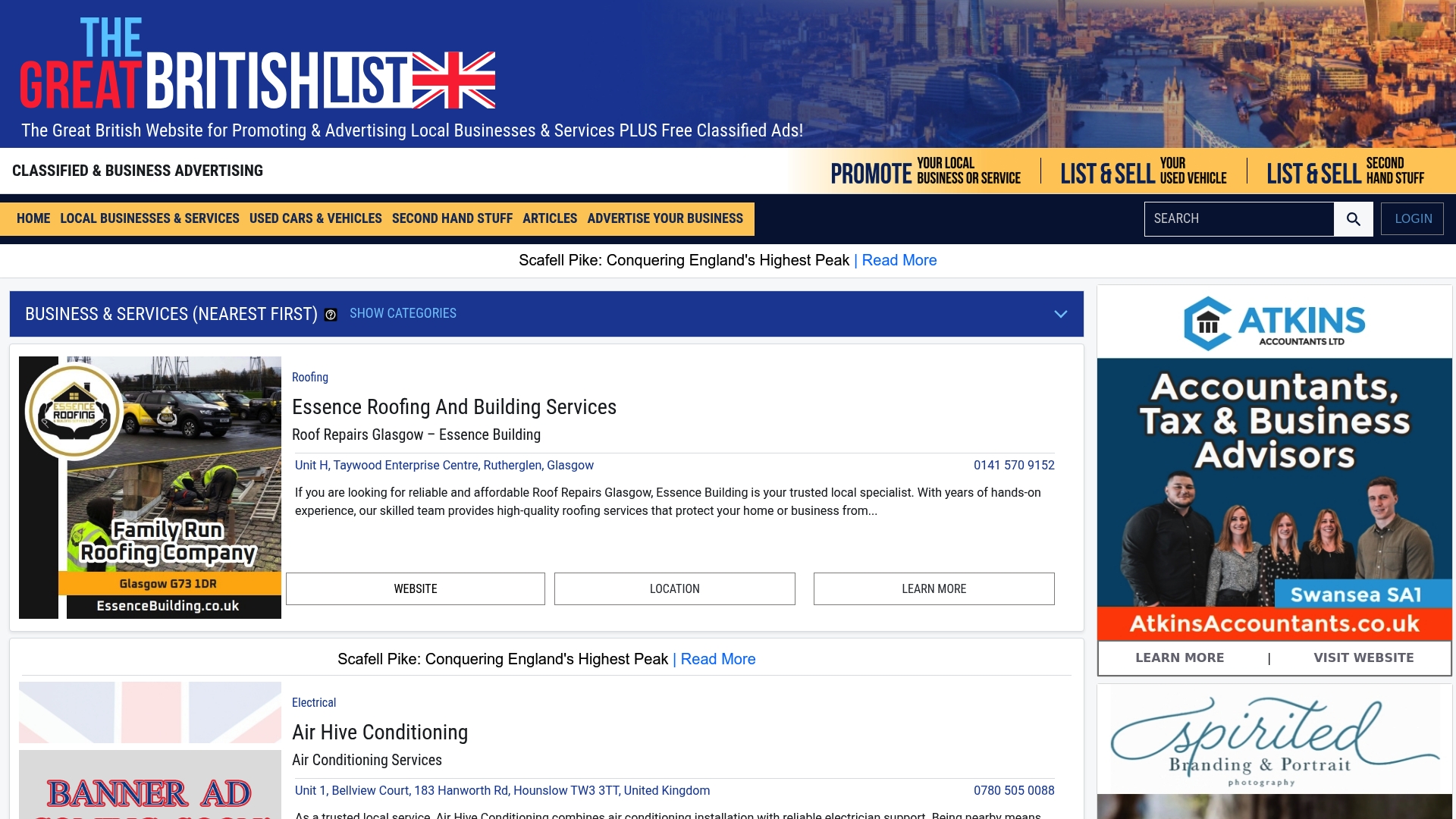
The directory includes detailed business profiles, contact information, and service descriptions, all organised by the standardised categories that help you compare options effectively. You can search by location, service type, and specific requirements, applying the category knowledge from this guide to find exactly what you need.
Frequently asked questions about service categories
What exactly are service categories?
Service categories are standardised groupings that organise similar trades and professional services together, such as home improvement, personal care, and professional services. These categories help consumers navigate directories and platforms to find appropriate local providers quickly and compare services within the same field.
How do service categories differ from individual service providers?
Service categories are the organisational framework, whilst service providers are the actual businesses or tradespeople within those categories. Think of categories as the filing system and providers as the individual files. Categories group similar services together, making it easier to locate specific providers who match your needs.
Why should I care about service categories when searching for local services?
Understanding service categories saves time, reduces confusion, and helps you avoid hiring inappropriate or unqualified providers. Categories act as a first filter, ensuring you’re comparing relevant specialists rather than wading through unrelated businesses. This structure also helps you identify which credentials or certifications to expect from providers in each category.
How can I tell if a directory uses legitimate service categories?
Legitimate directories use recognisable, logical groupings that align with government classifications and industry standards. Look for clear category names like “plumbing”, “electrical”, or “accountancy” rather than vague or overly broad labels. Reputable platforms also provide subcategories that help you narrow your search to specific services within broader groups.
Do service categories affect pricing or quality?
Categories themselves don’t determine price or quality, but they help you understand typical pricing structures and quality markers for each service type. Regional variations affect prices significantly, with London rates often 20 to 40% higher than northern regions for identical services. Understanding the category helps you research appropriate rates and credentials for your area and service needs.

.jpg)